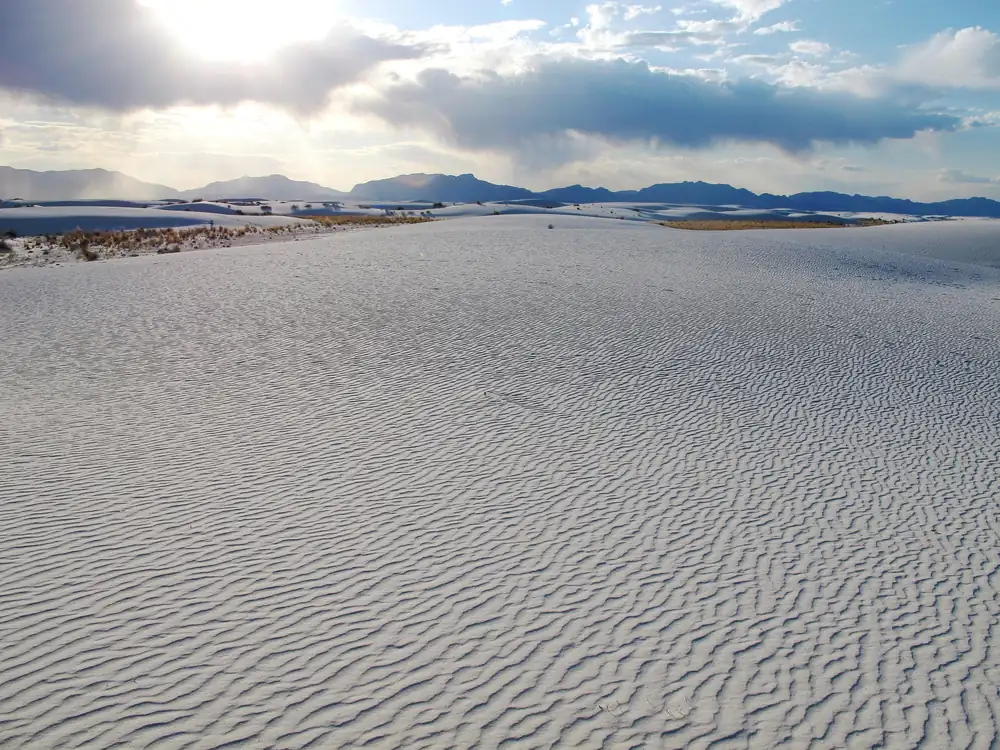
White Sands National Park covers 146,344 acres in New Mexico. It became a national park on December 20, 2019, the 62nd of today’s 64 parks to get that title. It recorded 659,742 recreation visits in 2025, the 35th most of the 63 parks with a 2025 count.
Today at White Sands
LiveLoading the forecast…
Checking park alerts…
Alerts: National Park Service, checked hourly. Forecast: National Weather Service, for White Sands Visitor Center. Always confirm on the official park site before you set out.
In the park service’s words
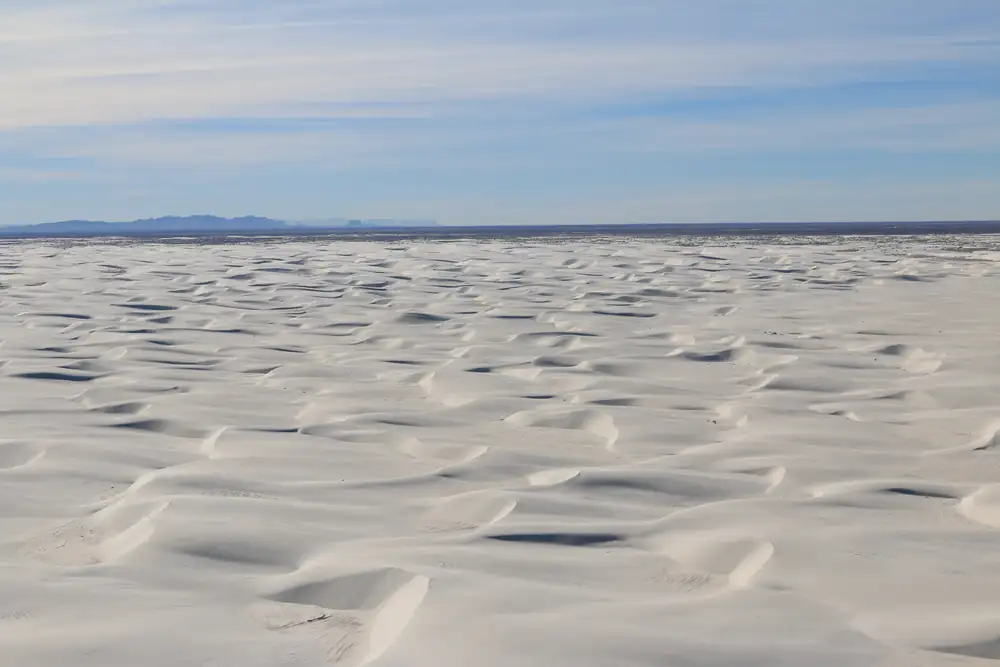
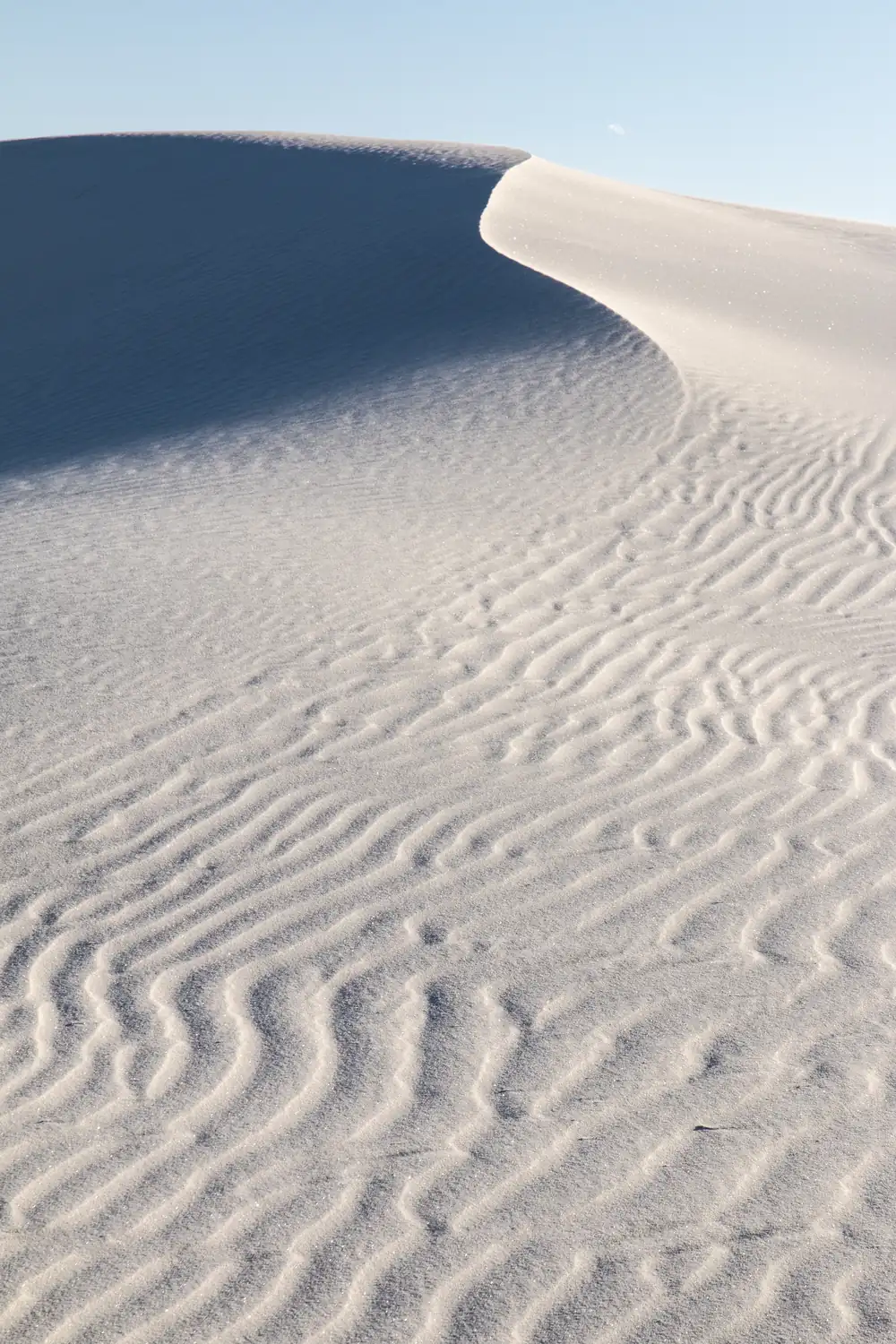
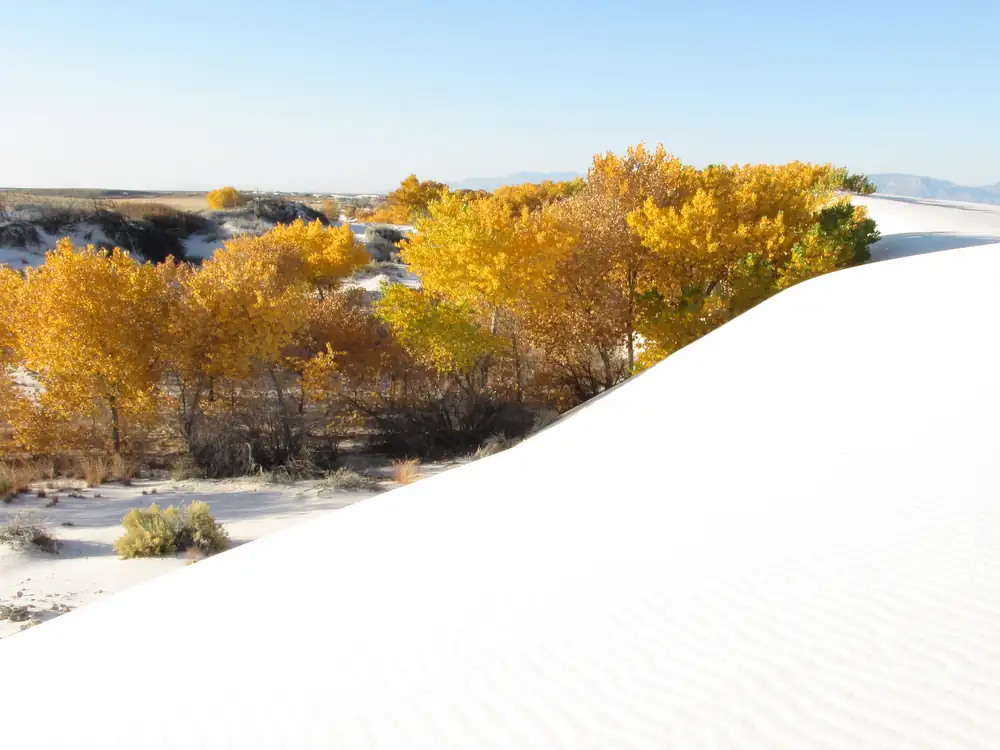
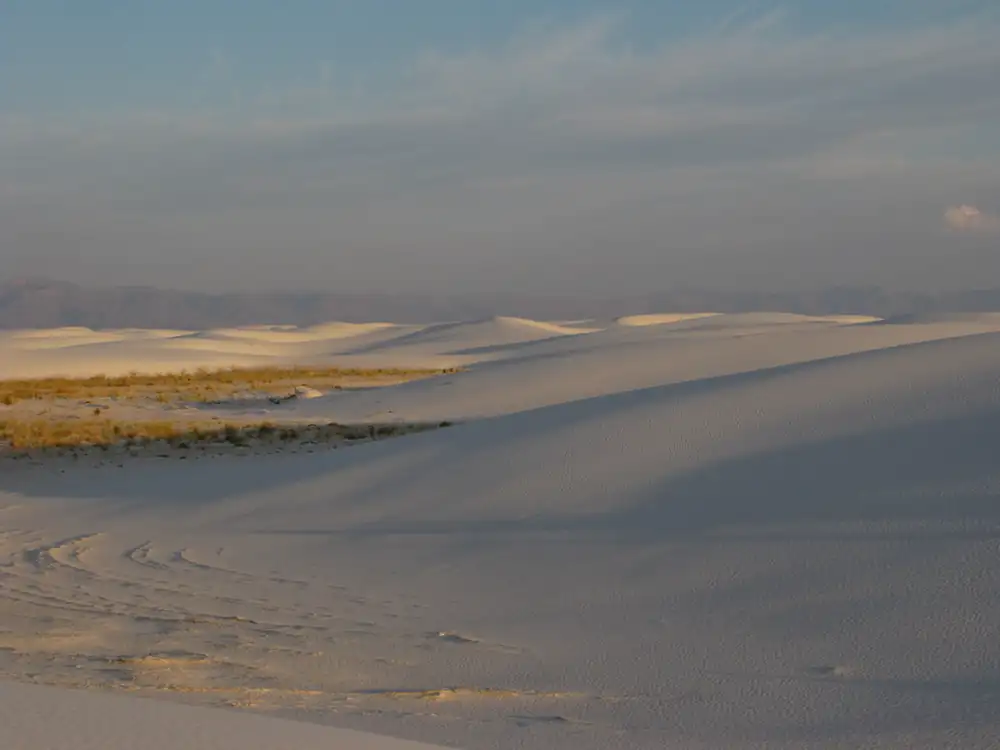
Rising from the heart of the Tularosa Basin is one of the world's great natural wonders - the glistening white sands of New Mexico. Great wave-like dunes of gypsum sand have engulfed 275 square miles of desert, creating the world's largest gypsum dunefield. White Sands National Park preserves a major portion of this unique dunefield, along with the plants and animals that live here.
From the National Park Service (public domain).
Entrance fee and passes
The standard entrance pass is $25 per vehicle. Per vehicle fee is charged to visitors for entry by a single, private non-commercial vehicle. Entrance fees are valid for reentry for seven consecutive days from the date of purchase.
The $80 America the Beautiful pass for U.S. residents covers this fee and everyone in your car. It pays for itself after 4 visits at this price, and it is accepted at every national park.
Entrance is free for U.S. residents on the 2026 fee-free days.
Best time to visit
- Best time to visit White Sands: February, April, October and November. The weather is at its most comfortable then, and crowds are lighter than at the peak.
- Busiest month: March, with about 100,525 visits in a typical recent year. That is 2.4 times as many as January.
- Quietest month: January (41,875 visits).
Bar height: visitors that month, compared with the busiest month. Temperatures: average daily high and low (°F); rain and snow: monthly averages. Best marks the months we suggest.
More detail: the best time to visit White Sands, month by month.
Plan your visit
- Best time to visit: crowds and weather month by month
- Itinerary: ready-made plans for 1 to 2 days
- Things to do: 5 hikes and 3 other activities
- Camping, RVs and lodging: 1 campgrounds
- Getting there: Nearest gas to White Sands Visitor Center: AAFES Service Station, 6.9 miles away. Closest airport Las Cruces International Airport (48 mi)
- Know before you go: safety, what to pack and what to leave at home
Popular hikes
- Hiking the Ice Age Trail (45 to 60 Minutes): This level, family-friendly trail interprets the Ice Age history of the Tularosa Basin
- Hiking Interdune Boardwalk (15 to 30 Minutes): The Interdune Boardwalk is an elevated boardwalk that leads you through the fragile interdune area to a scenic view of the dune field and the Sacramento mountains.
- Hiking Alkali Flat Trail (3 to 5 Hours): Imagine yourself surrounded by the spectacular views of endless dunes with few footprints. The Alkali Flat Trail takes you through the heart of the sands, up and over steep dunes to the edge of Alkali Flat.
- Hiking Dune Life Nature Trail (45 to 60 Minutes): The Dune Life Nature Trail is full of life! This family-friendly, one mile (1.6 km) loop trail is a great way to explore White Sands.
- Hiking Backcountry Camping Trail (2 to 3 Hours): Are you looking for expansive views of snow-white gypsum dunes for miles? Hiking the Backcountry Camping Trail provides a sense of the magnitude of the world's largest gypsum dunefield.
Weather, in the park service’s words
The park service says:
Temperatures at White Sands vary greatly throughout the year. Summer time temperatures can be very hot. Winters are mild with cool evenings. Spring time is the windy season. Fall is very enjoyable with mild daytime and night time temperatures.
From the National Park Service (public domain).
Nearby national parks by road
- Guadalupe Mountains (Texas): about 3 h 40 min by car (196 miles)
- Carlsbad Caverns (New Mexico): about 4 h 15 min by car (189 miles)
- Chiricahua (Arizona): about 5 h 10 min by car (281 miles)
- Saguaro (Arizona): about 5 h 40 min by car (320 miles)
Drive times run between the closest visitor centers of each pair, estimated with OSRM routing on OpenStreetMap roads. Link several parks with the road trip planner.
Sources
Last checked 1 November 2026.
Frequently asked questions
How much does it cost to enter White Sands National Park?
The standard entrance pass is $25 per vehicle. Per vehicle fee is charged to visitors for entry by a single, private non-commercial vehicle. Entrance fees are valid for reentry for seven consecutive days from the date of purchase.
What state is White Sands National Park in?
New Mexico.
When did White Sands become a national park?
December 20, 2019.
How many people visit White Sands?
659,742 recreation visits were counted in 2025.
When is the best time to visit White Sands?
February, April, October and November. March is the busiest month and January the quietest while the park is fully open.