Rocky Mountain National Park covers 265,848 acres in Colorado. It became a national park on January 26, 1915, the 9th of today’s 64 parks to get that title. It recorded 4,171,431 recreation visits in 2025, the 6th most of the 63 parks with a 2025 count.
Today at Rocky Mountain
LiveLoading the forecast…
Checking park alerts…
Alerts: National Park Service, checked hourly. Forecast: National Weather Service, for Fall River Visitor Center. Always confirm on the official park site before you set out.

In the park service’s words
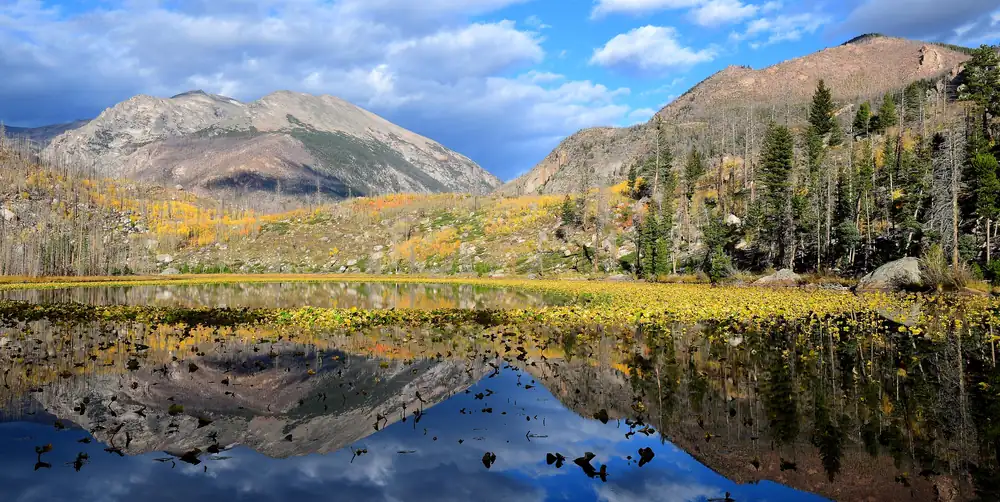
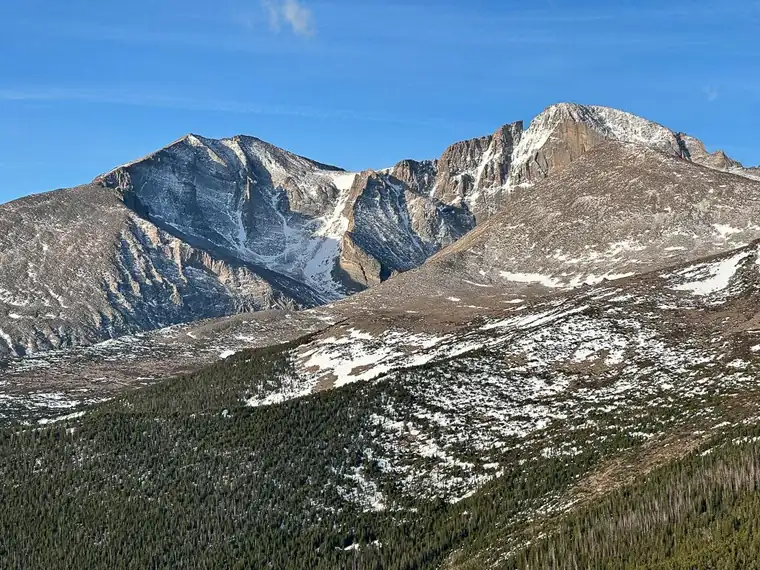
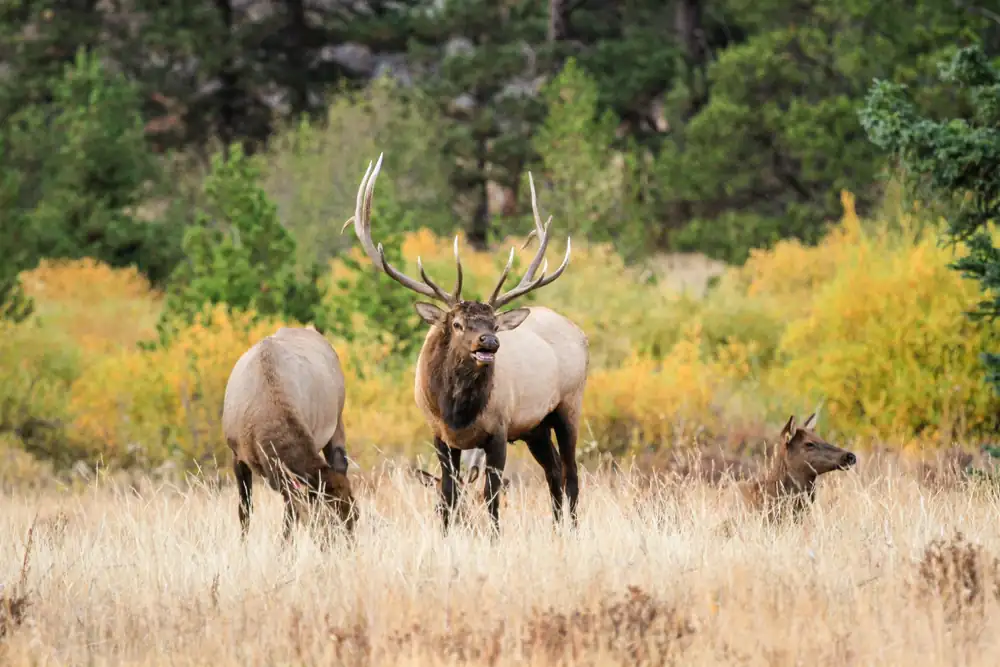
Rocky Mountain National Park's 415 square miles (265,807 acres) encompasses a spectacular range of mountain environments. From meadows found in the montane life zone to glistening alpine lakes and up to the towering mountain peaks, there is something for everyone to discover. Along the way explore over 300 miles of hiking trails and incredible wildlife viewing.
From the National Park Service (public domain).
Entrance fee and passes
The standard entrance pass is $30 per vehicle. 1-Day Vehicle Entrance Pass. This pass is valid for one private vehicle to enter RMNP for one day only. All passengers inside the vehicle are covered. Park entrance passes may be purchased in person at any of the park's entrance stations or in advance online at www.recreation.gov.
The $80 America the Beautiful pass for U.S. residents covers this fee and everyone in your car. It pays for itself after 3 visits at this price, and it is accepted at every national park.
Visitors who are not U.S. residents pay a $100 nonresident fee per person age 16 and older here, on top of the entrance fee, unless they hold the $250 nonresident annual pass. Rocky Mountain is one of the 11 parks that charge it. See nonresident fees.
Entrance is free for U.S. residents on the 2026 fee-free days.
Reservations and permits in 2026
Timed entry reservations were required from May 22 to mid-October 2026, booked only on Recreation.gov ($2 processing fee).
Check the park’s own site before you go, because these systems change from year to year.
Best time to visit
- Best time to visit Rocky Mountain: June to September. The weather is at its most comfortable then, and crowds are lighter than at the peak.
- Busiest month: July, with about 760,867 visits in a typical recent year. That is 4.7 times as many as April.
- Quietest month: February (103,435 visits), when weather or closures keep most people away.
Bar height: visitors that month, compared with the busiest month. Temperatures: average daily high and low (°F); rain and snow: monthly averages. Best marks the months we suggest.
More detail: the best time to visit Rocky Mountain, month by month.
Plan your visit
- Best time to visit: crowds and weather month by month
- Itinerary: ready-made plans for 1 to 2 days
- Things to do: 2 hikes and 10 other activities
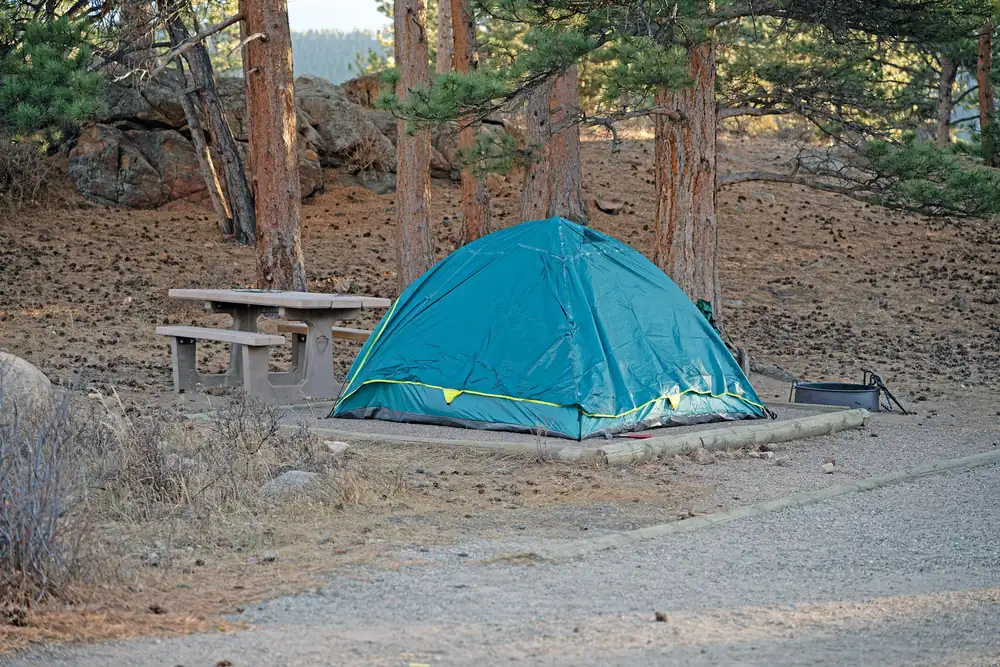
- Camping, RVs and lodging: 5 campgrounds, 4 lodges
- Getting there: Nearest gas to Information Office: Conoco in Estes Park, 0.9 miles away. Closest airport Rocky Mountain Metropolitan Airport (44 mi)
- Know before you go: safety, what to pack and what to leave at home
Popular hikes
- Hiking with Traction Devices: Enjoy the winter wonderland that Rocky has to offer from late October to early June. When there is hard-packed snow and ice on the trails, don't forget to use traction devices!
- Visit the Holzwarth Historic Site: Take a step back in time at the Holzwarth Historic Site, the spot where the Never Summer Ranch, Holzwarth Trout Lodge, and family homestead was operated by the Holzwarth family for multiple generations from the 1910s to the 1970's. The Holzwarth Historic Site is located on the West Side of Rocky Mountain National Park
Webcams
- Alpine Visitor Center
- Kawuneeche Valley
- Longs Peak
- Fall River Entrance/U.S. Hwy 34
- Beaver Meadows Entrance/U.S. Hwy 36
- Grand Lake Entrance/ U.S. Hwy 34
- Continental Divide
Weather, in the park service’s words
The park service says:
Weather can change quickly in Rocky Mountain National Park due to the mountains and elevation. Elevation in the park ranges from 7,800 feet above sea level to over 14,000 feet at the top of the tallest mountain peaks. Weather conditions can change quickly throughout the day. For detailed weather information, visit https://www.nps.gov/romo/planyourvisit/all-about-weather.htm For the most up-to-date weather forecasts, visit the National Weather Service webpage for Rocky at https://www.weather.gov/bou/rmnp
From the National Park Service (public domain).
Nearby national parks by road
- Great Sand Dunes (Colorado): about 5 h 40 min by car (245 miles)
- Black Canyon of the Gunnison (Colorado): about 5 h 55 min by car (229 miles)
- Arches (Utah): about 6 h 20 min by car (318 miles)
- Canyonlands (Utah): about 6 h 35 min by car (325 miles)
Drive times run between the closest visitor centers of each pair, estimated with OSRM routing on OpenStreetMap roads. Link several parks with the road trip planner.
Sources
Last checked 1 November 2026.
Frequently asked questions
How much does it cost to enter Rocky Mountain National Park?
The standard entrance pass is $30 per vehicle. 1-Day Vehicle Entrance Pass. This pass is valid for one private vehicle to enter RMNP for one day only. All passengers inside the vehicle are covered. Park entrance passes may be purchased in person at any of the park's entrance stations or in advance online at www.recreation.gov. Non-U.S. residents also pay a $100 per person nonresident fee unless they have the $250 nonresident annual pass.
What state is Rocky Mountain National Park in?
Colorado.
When did Rocky Mountain become a national park?
January 26, 1915.
How many people visit Rocky Mountain?
4,171,431 recreation visits were counted in 2025.
Do you need a reservation for Rocky Mountain in 2026?
Timed entry reservations were required from May 22 to mid-October 2026, booked only on Recreation.gov ($2 processing fee).
When is the best time to visit Rocky Mountain?
June to September. July is the busiest month and April the quietest while the park is fully open.