Shenandoah National Park covers 200,446 acres in Virginia. It became a national park on December 26, 1935, the 22nd of today’s 64 parks to get that title. It recorded 1,682,152 recreation visits in 2025, the 19th most of the 63 parks with a 2025 count.
Today at Shenandoah
LiveLoading the forecast…
Checking park alerts…
Alerts: National Park Service, checked hourly. Forecast: National Weather Service, for Dickey Ridge Visitor Center. Always confirm on the official park site before you set out.
In the park service’s words
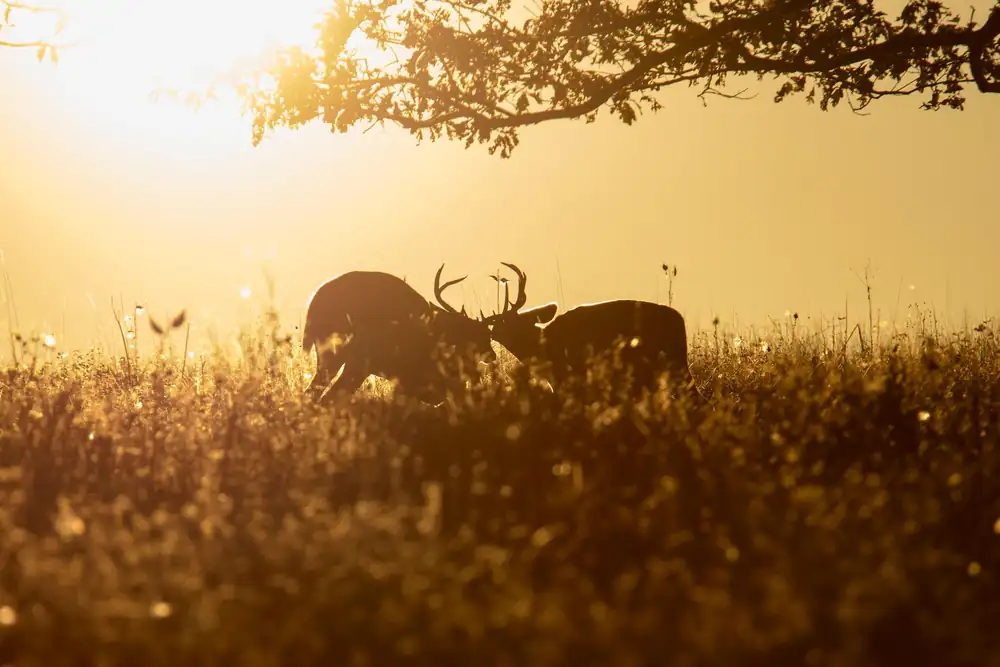
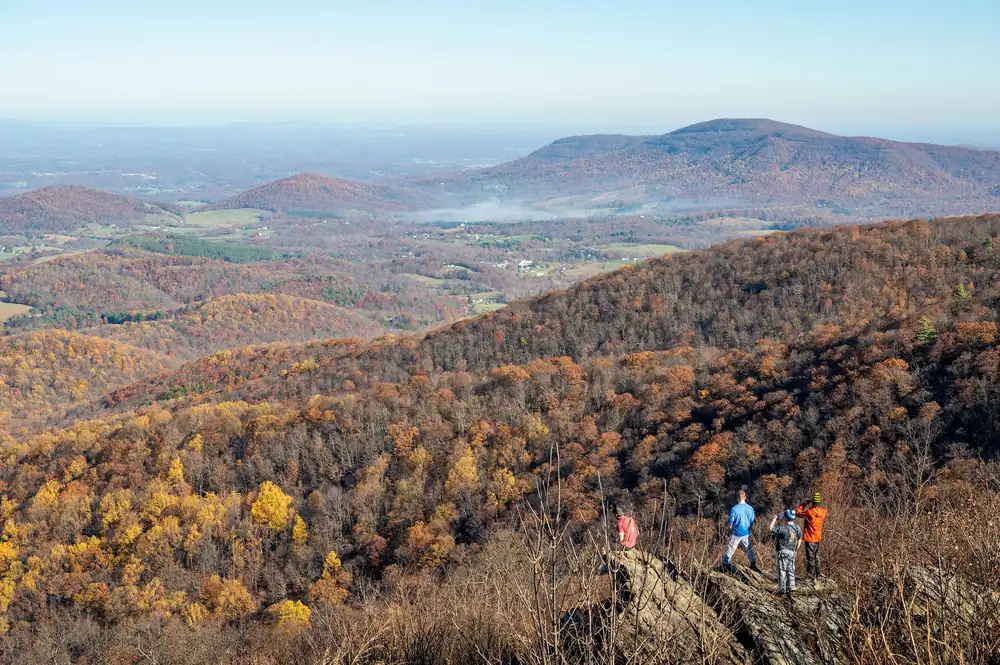
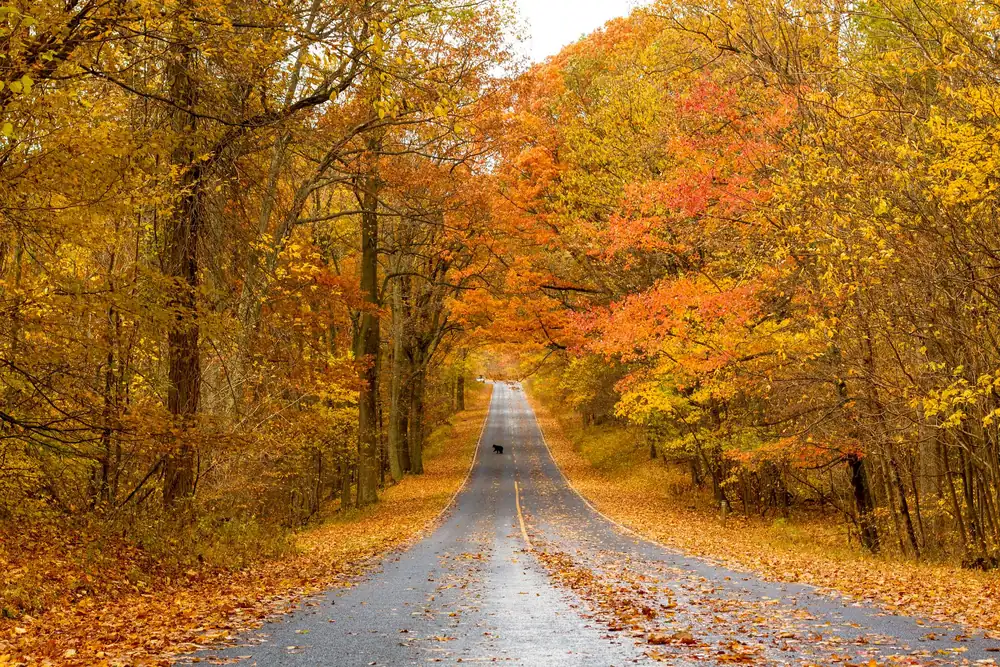
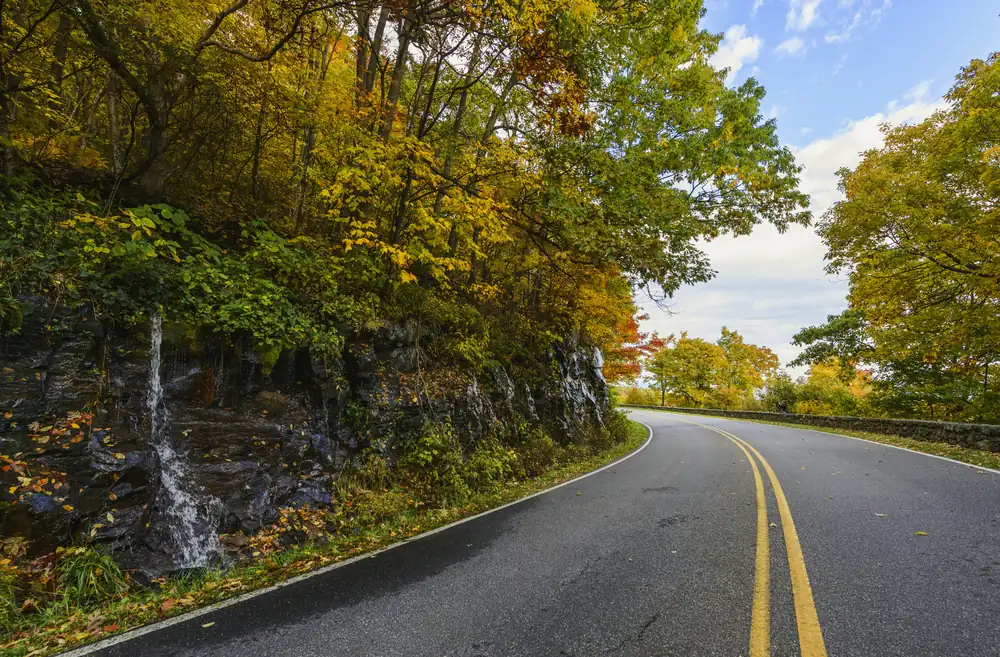
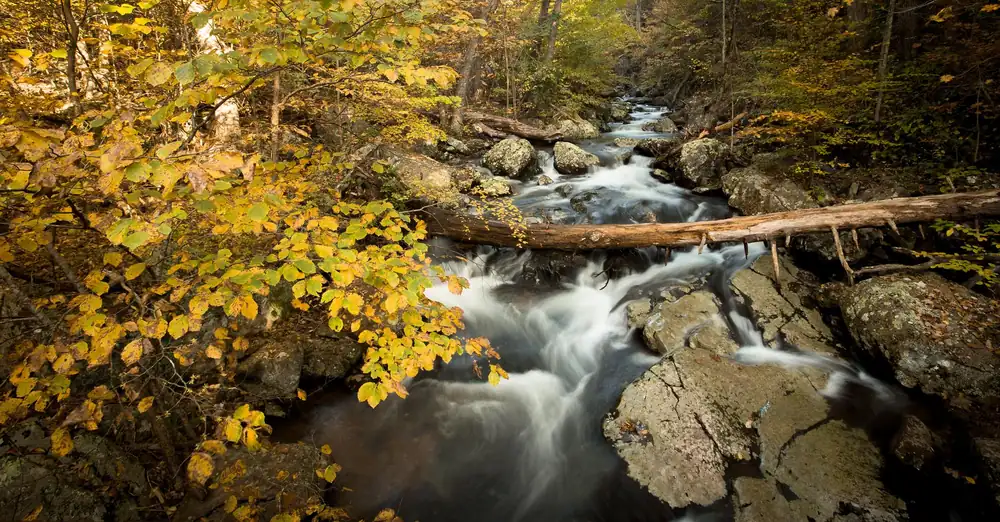
Just 75 miles from the bustle of Washington, D.C., Shenandoah National Park is a land bursting with cascading waterfalls, spectacular vistas, fields of wildflowers, and quiet wooded hollows. With over 200,000 acres of protected lands that are haven to deer, songbirds, and black bear, there's so much to explore...and your journey begins right here!
From the National Park Service (public domain).
Entrance fee and passes
The standard entrance pass is $30 per vehicle. Unlimited entry for one vehicle and all passengers for seven consecutive days, beginning on the day of purchase. Admits the pass holder and occupants of a single, private non-commercial vehicle.
The $80 America the Beautiful pass for U.S. residents covers this fee and everyone in your car. It pays for itself after 3 visits at this price, and it is accepted at every national park.
Entrance is free for U.S. residents on the 2026 fee-free days.
Best time to visit
- Best time to visit Shenandoah: April to June and September. The weather is at its most comfortable then, and crowds are lighter than at the peak.
- Busiest month: October, with about 318,893 visits in a typical recent year. That is 4.3 times as many as March.
- Quietest month: January (19,222 visits), when weather or closures keep most people away.
Bar height: visitors that month, compared with the busiest month. Temperatures: average daily high and low (°F); rain and snow: monthly averages. Best marks the months we suggest.
More detail: the best time to visit Shenandoah, month by month.
Plan your visit
- Best time to visit: crowds and weather month by month
- Itinerary: a ready-made day
- Things to do: 47 hikes and 2 other activities
- Camping, RVs and lodging: 4 campgrounds, 3 lodges
- Getting there: Nearest gas to Harry F. Byrd Sr. Visitor Center: Big Meadows Wayside in Stanley, 0.1 miles away. Closest airport Charlottesville Albemarle Airport (24 mi)
- Know before you go: safety, what to pack and what to leave at home
Popular hikes
- Old Rag Circuit (7 to 8 Hours): PARK BOUNDARY | Visitors must obtain an Old Rag day-use ticket in advance of this hike. Pets are not allowed. Old Rag is a popular, very strenuous hike with sweeping views and several scrambles across large rocks. This route starts from the Old Rag parking area on the boundary of the Park.
- Stony Man (1 to 2 Hours): MILE 41.7 | Pets are not allowed on this hike. This enjoyable hike brings you to an outstanding view of the Shenandoah Valley, Massanutten Mountain, and beyond.
- Whiteoak Falls (Lower) (1 to 2 Hours): PARK BOUNDARY | An easier hike to the base of the lower falls in Whiteoak Canyon. Note that a Park entrance fee is still required.
- Turk Mountain (2 to 3 Hours): MILE 94.1 | A hike to the 2,981’ summit of Turk Mountain, located in the Shenandoah Wilderness, that provides a wonderful view to the west.
- Riprap - Wildcat Ridge (8 to 9 Hours): MILE 90 or 92.1 | This loop can be hiked from Riprap Parking or Wildcat Ridge Parking. It takes you through the forests of the Shenandoah Wilderness and over several stream crossings, while offering beautiful views of the hollows and valley to the west and north.
Webcams
- Big Meadows
- The Shenandoah Valley Webcam (live video)
- Big Meadows Live (live video)
- Mountain View Cam
Weather, in the park service’s words
The park service says:
Shenandoah National Park has four very distinct seasons. Spring typically brings mild temperatures, rain, and wildflowers. Summer brings lush green forests, but can be hot and very humid. Fall follows with cooler temperatures and spectacular fall foliage. Winter can bring snow and ice. The park spans roughly 100 miles, which means that weather can vary greatly depending on your location. The mountain is usually 10°F cooler than the valley below. Always check the forecast, dress in layers, and be prepared.
From the National Park Service (public domain).
Nearby national parks by road
- New River Gorge (West Virginia): about 3 h 55 min by car (190 miles)
- Cuyahoga Valley (Ohio): about 6 h 25 min by car (305 miles)
- Great Smoky Mountains (North Carolina and Tennessee): about 7 h 45 min by car (393 miles)
- Congaree (South Carolina): about 8 h 45 min by car (435 miles)
Drive times run between the closest visitor centers of each pair, estimated with OSRM routing on OpenStreetMap roads. Link several parks with the road trip planner.
Sources
Last checked 1 November 2026.
Frequently asked questions
How much does it cost to enter Shenandoah National Park?
The standard entrance pass is $30 per vehicle. Unlimited entry for one vehicle and all passengers for seven consecutive days, beginning on the day of purchase. Admits the pass holder and occupants of a single, private non-commercial vehicle.
What state is Shenandoah National Park in?
Virginia.
When did Shenandoah become a national park?
December 26, 1935.
How many people visit Shenandoah?
1,682,152 recreation visits were counted in 2025.
When is the best time to visit Shenandoah?
April to June and September. October is the busiest month and March the quietest while the park is fully open.
Nearby parks
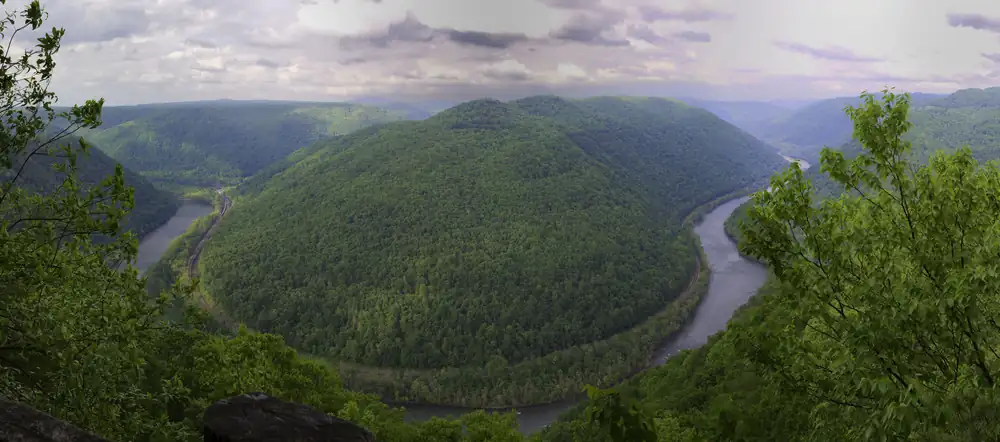 West VirginiaNew River Gorge National Park & Preserve
West Virginia. 1,958,440 visits in 2025. No entrance fee.
 OhioCuyahoga Valley National Park
Ohio. 3,025,325 visits in 2025. No entrance fee.
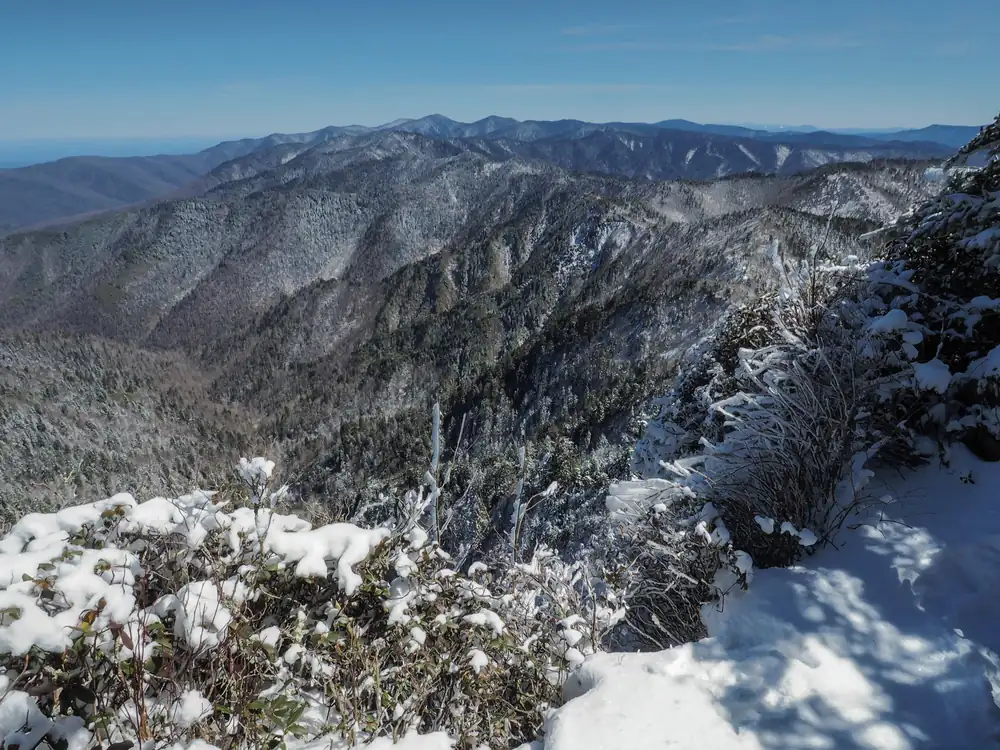 North Carolina and TennesseeGreat Smoky Mountains National Park
North Carolina and Tennessee. 11,527,939 visits in 2025. No entrance fee.