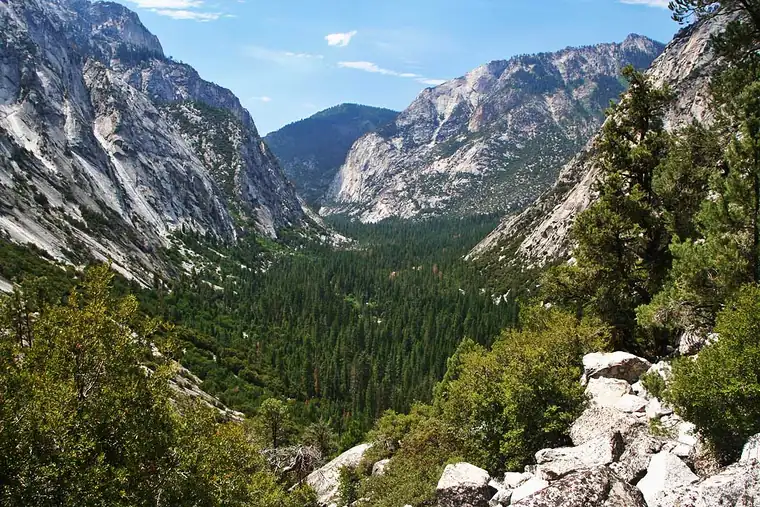
Sequoia National Park covers 404,063 acres in California. It became a national park on September 25, 1890, the 2nd of today’s 64 parks to get that title. It recorded 1,378,337 recreation visits in 2025, the 23rd most of the 63 parks with a 2025 count.
Today at Sequoia
LiveLoading the forecast…
Checking park alerts…
Alerts: National Park Service, checked hourly. Forecast: National Weather Service, for Foothills Visitor Center. Always confirm on the official park site before you set out.
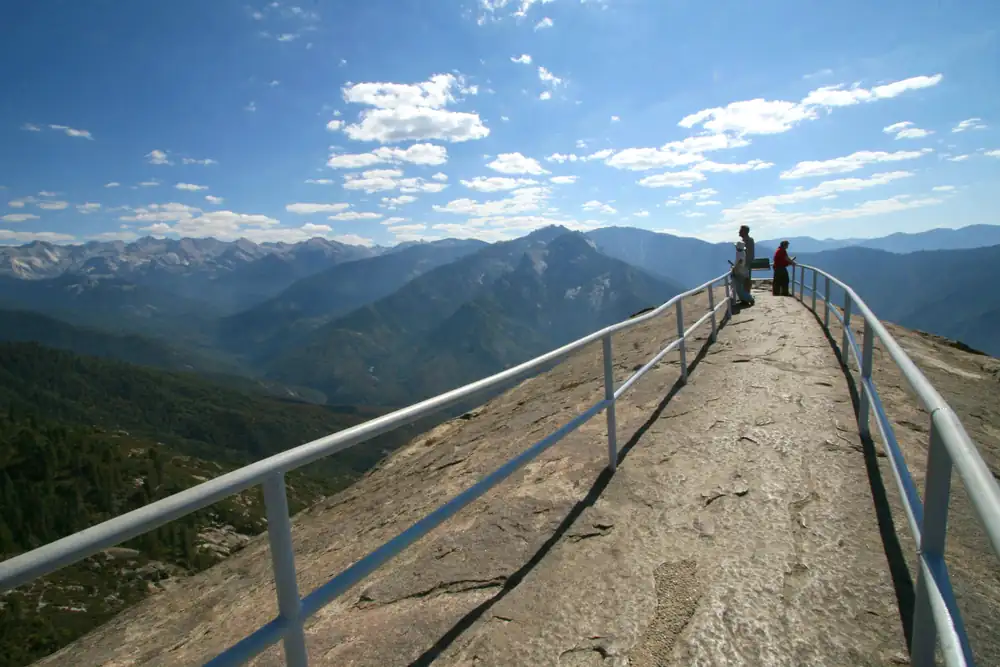
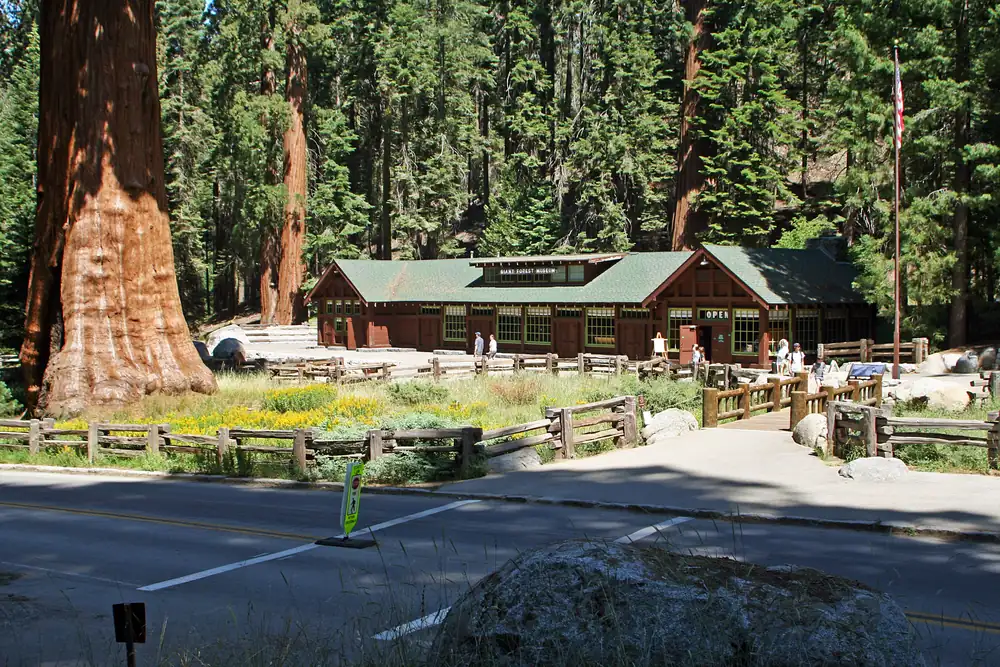
In the park service’s words
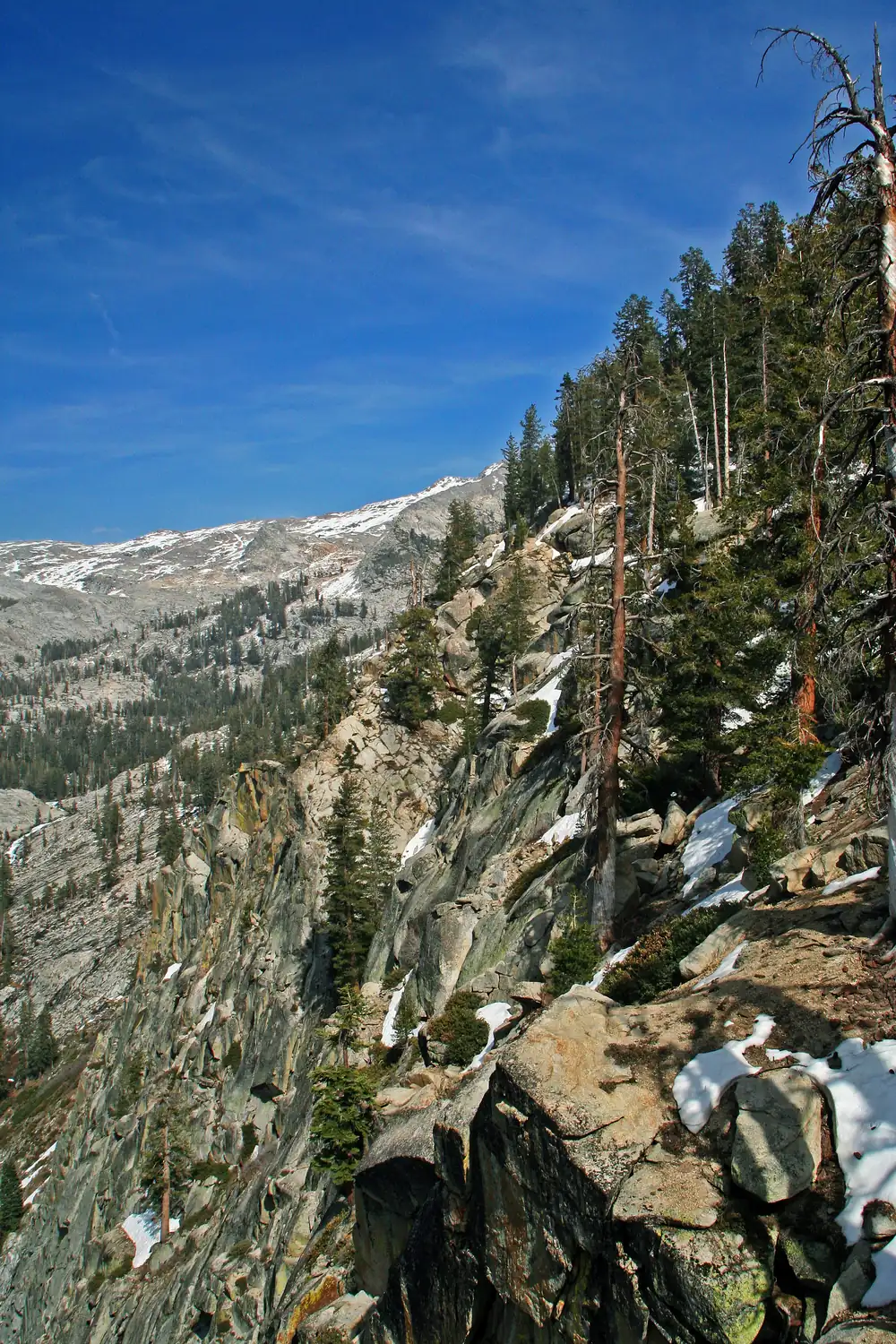
Huge mountains, rugged foothills, deep canyons, vast caverns, and the world’s largest trees exemplify the diversity of landscapes, life, and beauty here. Explore these pages to plan your visit or to learn about the plants and animals here and the threats they face. Ancient giant sequoias may seem invincible, but they, too are vulnerable.
From the National Park Service (public domain).
Entrance fee and passes
The standard entrance pass is $35 per vehicle. This pass is valid for 1-7 days and includes everyone traveling in a single vehicle for Sequoia & Kings Canyon National Parks and Hume Lake District of Sequoia National Forest/Giant Sequoia National Monument.
The $80 America the Beautiful pass for U.S. residents covers this fee and everyone in your car. It pays for itself after 3 visits at this price, and it is accepted at every national park.
Visitors who are not U.S. residents pay a $100 nonresident fee per person age 16 and older here, on top of the entrance fee, unless they hold the $250 nonresident annual pass. Sequoia is one of the 11 parks that charge it. See nonresident fees.
Entrance is free for U.S. residents on the 2026 fee-free days.
Best time to visit
- Best time to visit Sequoia: April, May, October and November. The weather is at its most comfortable then, and crowds are lighter than at the peak.
- Busiest month: July, with about 194,206 visits in a typical recent year. That is 4.8 times as many as January.
- Quietest month: February (38,716 visits), when weather or closures keep most people away.
Bar height: visitors that month, compared with the busiest month. Temperatures: average daily high and low (°F); rain and snow: monthly averages. Best marks the months we suggest.
More detail: the best time to visit Sequoia, month by month.
Plan your visit
- Best time to visit: crowds and weather month by month
- Itinerary: a ready-made day
- Things to do: 27 hikes and 33 other activities
- Camping, RVs and lodging: 15 campgrounds, 3 lodges
- Getting there: Nearest gas to Foothills Visitor Center: Chevron in Three Rivers, 5.5 miles away. Closest airport Eastern Sierra Regional Airport (47 mi)
- Know before you go: safety, what to pack and what to leave at home
Popular hikes
- Paradise Creek (1 to 2 Hours): Explore Paradise Canyon in the Foothills of Sequoia National Park. This gentle trail parallels Paradise Creek, taking you past waterfalls and pools.
- Explore Hidden Sequoias at Muir Grove (2 to 3 Hours): Take a hike to a sequoia grove that is tucked away from the road. Muir Grove provides a quiet experience among these giant trees. If you find other sequoia groves to be a bit crowded, take a walk to experience Muir Grove.
- Monarch Lake: Upper and Lower Monarch Lakes are gorgeous alpine lakes that lie at the base of Sawtooth Peak. You can hike this 10-mile route as a day hike or an as an overnight backpacking trip, but be aware that camping is only allowed several miles into your route. There is an elevation gain of 2,867 feet.
- Eagle and Mosquito Lakes: Both Eagle and Mosquito lakes offer beautiful views of Mineral Kings alpine landscape. Eagle and Mosquito Lakes trails share the same route for the first 2 miles. The trail for both is 10 miles out and back with over 3,000 feet of elevation change.
- Cold Springs Nature Trail: The Cold Springs Nature Trail is a great option for visitors looking for an easier trail and staying at the Cold Springs Campground. Many of the hikes in the Mineral King area are long and steep. This route is a gentle hike 3 mile (4.8 km) hike with a 500-foot elevation gain and offers a taste of the Mineral King area.
Webcams
Weather, in the park service’s words
The park service says:
Because of the extreme elevation range in the parks, weather conditions vary widely between areas. In summer, the sequoia groves have comfortable temperatures and the foothills are hot and dry. Snow lingers on high-mountain passes well into summer. In fall, conditions can range from summer-like to winter-like. Winter brings snow to sequoia groves and rain to the foothills. Be prepared for tire chain requirements. Spring is a great time to hike in the foothills and snow begins to melt at higher elevations.
From the National Park Service (public domain).
Nearby national parks by road
- Kings Canyon (California): about 47 min by car (26 miles)
- Yosemite (California): about 3 h 20 min by car (144 miles)
- Pinnacles (California): about 4 h by car (172 miles)
- Joshua Tree (California): about 6 h 20 min by car (302 miles)
Drive times run between the closest visitor centers of each pair, estimated with OSRM routing on OpenStreetMap roads. Link several parks with the road trip planner.
Sources
Last checked 1 November 2026.
Frequently asked questions
How much does it cost to enter Sequoia National Park?
The standard entrance pass is $35 per vehicle. This pass is valid for 1-7 days and includes everyone traveling in a single vehicle for Sequoia & Kings Canyon National Parks and Hume Lake District of Sequoia National Forest/Giant Sequoia National Monument. Non-U.S. residents also pay a $100 per person nonresident fee unless they have the $250 nonresident annual pass.
What state is Sequoia National Park in?
California.
When did Sequoia become a national park?
September 25, 1890.
How many people visit Sequoia?
1,378,337 recreation visits were counted in 2025.
When is the best time to visit Sequoia?
April, May, October and November. July is the busiest month and January the quietest while the park is fully open.