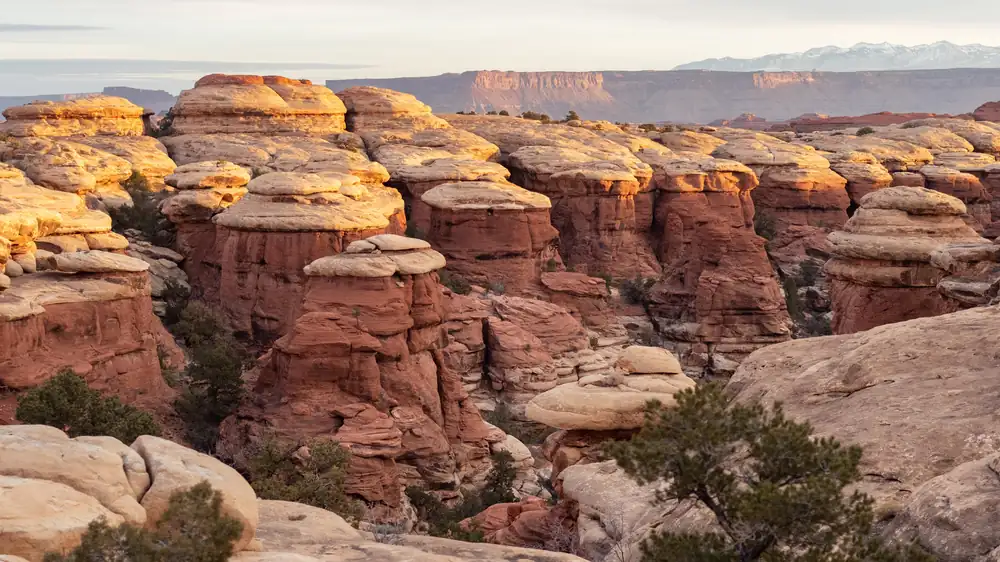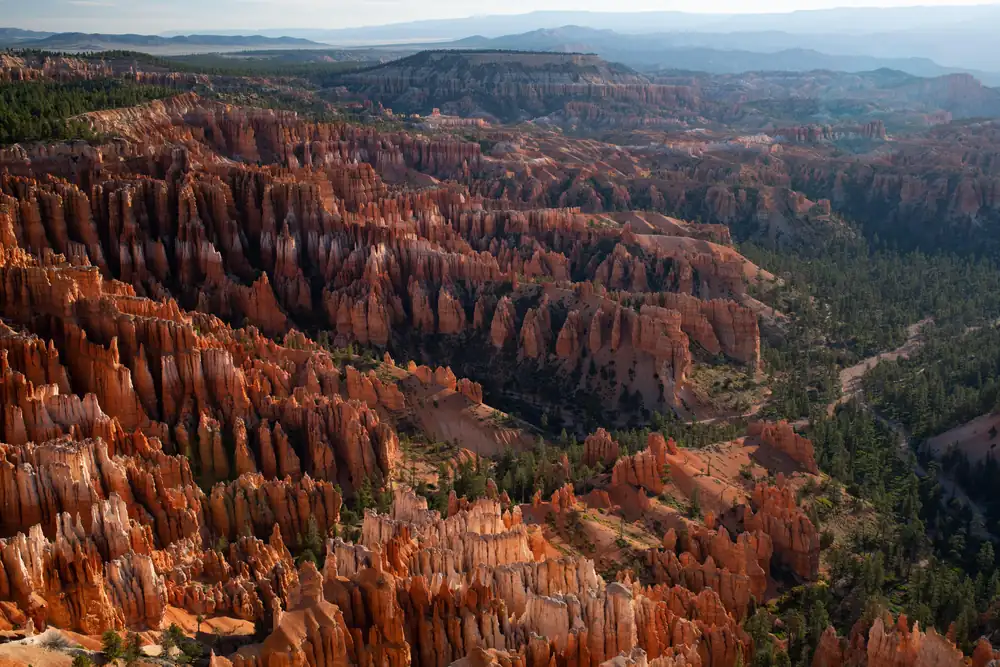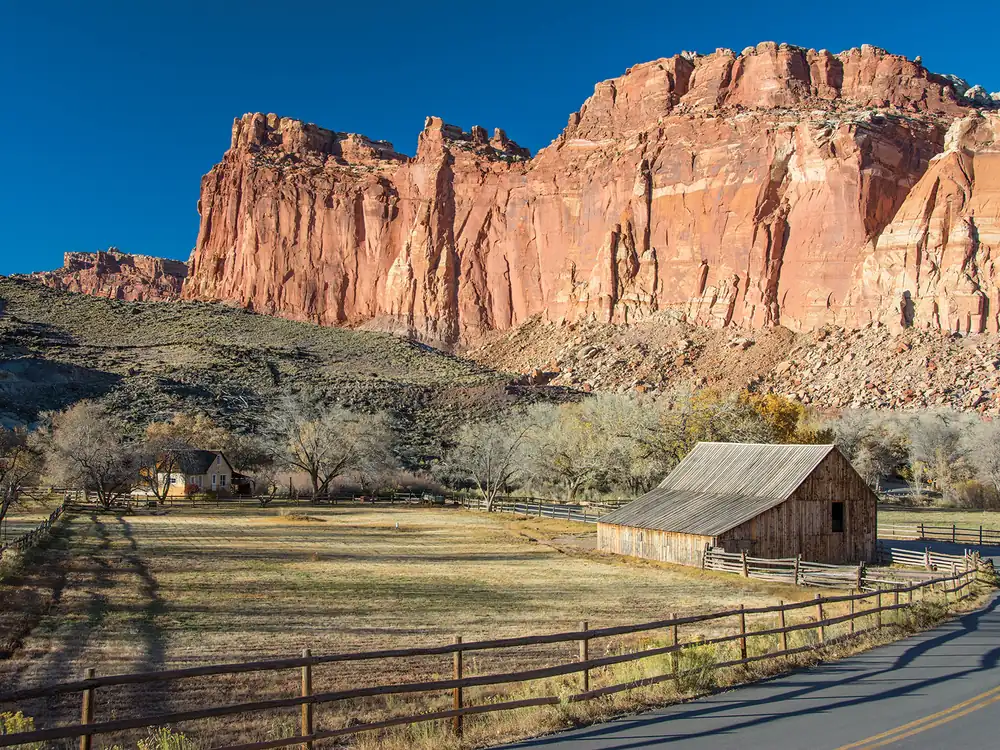
Capitol Reef National Park covers 241,904 acres in Utah. It became a national park on December 18, 1971, the 35th of today’s 64 parks to get that title. It recorded 1,388,476 recreation visits in 2025, the 22nd most of the 63 parks with a 2025 count.
Today at Capitol Reef
LiveLoading the forecast…
Checking park alerts…
Alerts: National Park Service, checked hourly. Forecast: National Weather Service, for Capitol Reef National Park Visitor Center. Always confirm on the official park site before you set out.
In the park service’s words
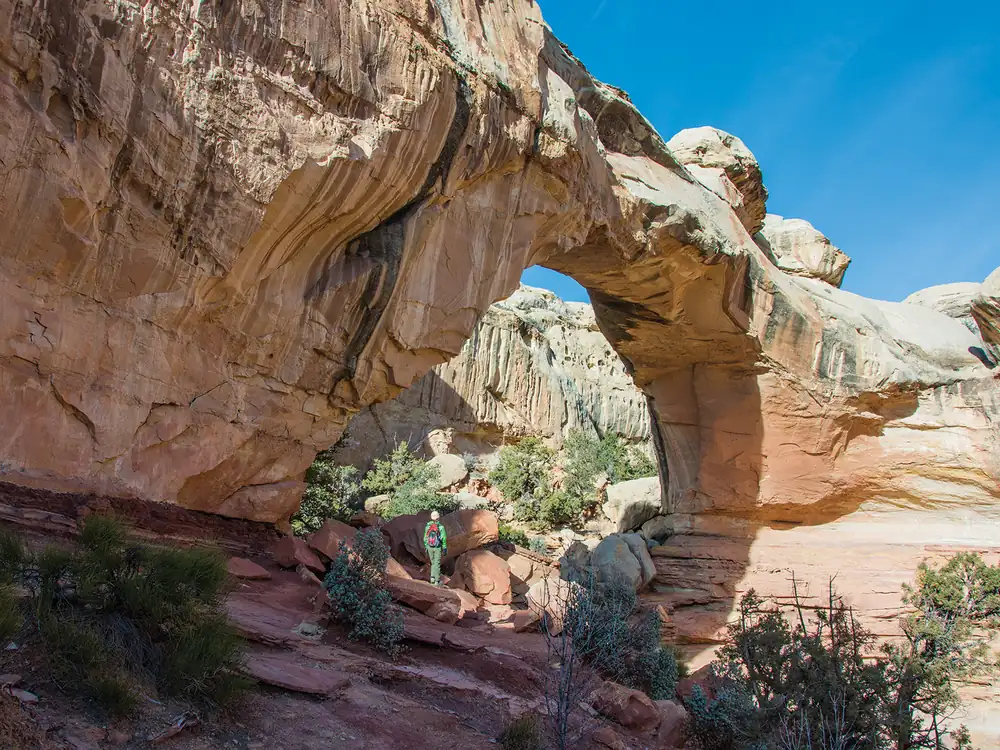
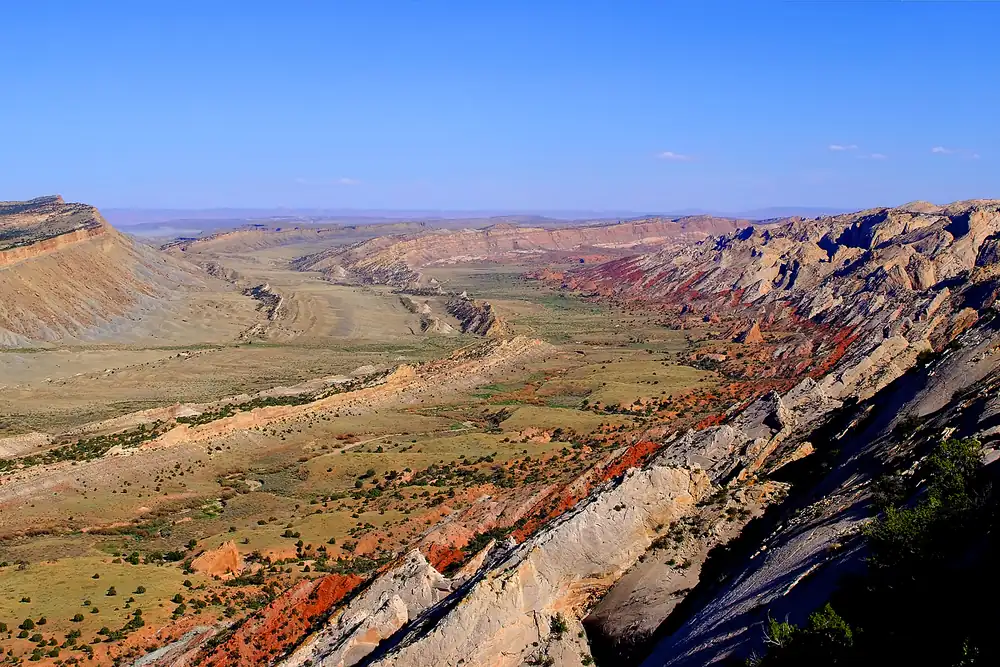
Located in south-central Utah in the heart of red rock country, Capitol Reef National Park is a hidden treasure filled with cliffs, canyons, domes, and bridges in the Waterpocket Fold, a geologic monocline (a wrinkle on the earth) extending almost 100 miles.
From the National Park Service (public domain).
Entrance fee and passes
The standard entrance pass is $20 per vehicle. An entrance fee is charged per vehicle.
The $80 America the Beautiful pass for U.S. residents covers this fee and everyone in your car. It pays for itself after 4 visits at this price, and it is accepted at every national park.
Entrance is free for U.S. residents on the 2026 fee-free days.
Best time to visit
- Best time to visit Capitol Reef: April, May, September and October. The weather is at its most comfortable then, and crowds are lighter than at the peak.
- Busiest month: May, with about 216,346 visits in a typical recent year. That is 3.5 times as many as November.
- Quietest month: January (18,545 visits), when weather or closures keep most people away.
Bar height: visitors that month, compared with the busiest month. Temperatures: average daily high and low (°F); rain and snow: monthly averages. Best marks the months we suggest.
More detail: the best time to visit Capitol Reef, month by month.
Plan your visit
- Best time to visit: crowds and weather month by month
- Itinerary: ready-made plans for 1 to 3 days
- Things to do: 5 hikes and 6 other activities
- Camping, RVs and lodging: 5 campgrounds
- Getting there: Nearest gas to Capitol Reef National Park Visitor Center: PetroUS in Torrey, 7.0 miles away. Closest airport Canyonlands Regional Airport (87 mi)
- Know before you go: safety, what to pack and what to leave at home
Popular hikes
- Watch the Sunset: Watch the sunset from various scenic points in Capitol Reef. Take an easy stroll or a strenuous hike as the sun goes down. Don't forget to bring a headlamp.
- Hike in the South (Waterpocket) District: Get to know the South (Waterpocket) District on foot by hiking an easy trail or strenuous backcountry route. Many of these hikes are accessible only by unpaved roads.
- Hike Cathedral Valley: Explore Cathedral Valley by foot. These hikes are accessible only by rough unpaved roads. A high clearance vehicle is necessary and four-wheel drive is recommended at times.
- Hike an Easy or Moderate Trail: Hike an easy or moderate trail to see panoramic views or to experience a deep sandstone canyon.
- Hike a Strenuous Trail: Hike a strenuous trail to view dramatic geologic formations and spectacular vistas.
Weather, in the park service’s words
The park service says:
Weather is posted daily; check at the park visitor center for weather updates. Do not enter into narrow canyons if there is a threat of rain or if rain has been falling in the area. Rain and snow may also make dirt roads impassable to vehicles.
From the National Park Service (public domain).
Nearby national parks by road
- Arches (Utah): about 2 h 50 min by car (142 miles)
- Canyonlands (Utah): about 3 h by car (149 miles)
- Bryce Canyon (Utah): about 3 h 5 min by car (123 miles)
- Zion (Utah): about 3 h 45 min by car (182 miles)
Drive times run between the closest visitor centers of each pair, estimated with OSRM routing on OpenStreetMap roads. Link several parks with the road trip planner.
Sources
Last checked 1 November 2026.
Frequently asked questions
How much does it cost to enter Capitol Reef National Park?
The standard entrance pass is $20 per vehicle. An entrance fee is charged per vehicle.
What state is Capitol Reef National Park in?
Utah.
When did Capitol Reef become a national park?
December 18, 1971.
How many people visit Capitol Reef?
1,388,476 recreation visits were counted in 2025.
When is the best time to visit Capitol Reef?
April, May, September and October. May is the busiest month and November the quietest while the park is fully open.